
MRI Brain with CP Angle | Test Price In Delhi, India
Starting only @
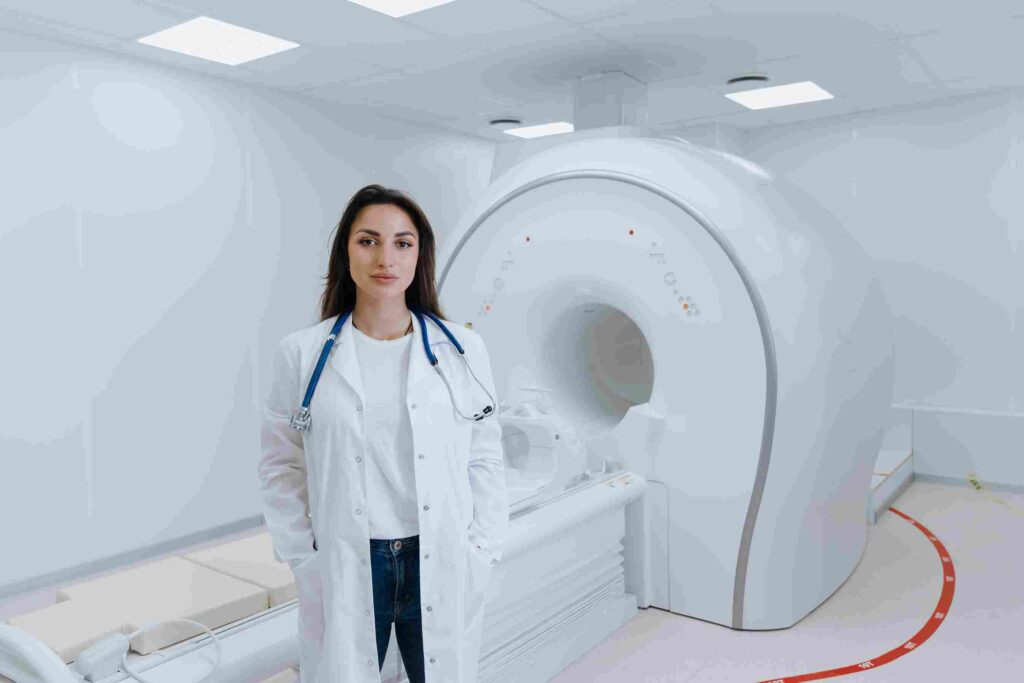
MRI Brain With CP Angle
Book your MRI Brain With CP Angle Scan with CareBox today – accurate results, expert radiologists, and transparent prices starting at ₹4,999.
Call Now At +91 9953630773 to Book your test at 50% Discount.
Exclusive Benefits with Carebox

Personalized support to help you find the best centers nearby

Guaranteed discount on your scan at any center you choose

Get up to 60% additional discount on All tests & Scans

Skip the wait—book priority appointments for your scans.

Why CareBox is the Right Choice for You

Over 1.5 Lakh Patients Trust Us for Their Tests Every Month
Get Up to 60% Off on Every Scan—Start Saving Today!
100% Reliable and Accurate Reports
ISO and NABH Certified Scan Center
Introduction
An MRI Brain With CP Angle is a specialized imaging procedure that focuses on the cerebellopontine (CP) angle, a critical area at the base of the brain where the cerebellum meets the pons. This region contains key cranial nerves, including the vestibulocochlear nerve (CN VIII) and the facial nerve (CN VII), responsible for hearing, balance, and facial movements.
MRI imaging of the CP angle is essential for detecting tumors, cysts, nerve compression, vascular abnormalities, and other pathologies that can affect hearing, balance, or facial function. The integration of artificial intelligence (AI) in MRI is enhancing the speed, accuracy, and diagnostic quality of these scans.
What Is an MRI Brain With CP Angle?
Magnetic Resonance Imaging (MRI) is a non-invasive imaging technique that uses magnetic fields, radio waves, and computer processing to produce detailed images of the brain and surrounding structures.
When focused on the CP angle, MRI provides:
- High-resolution images of the cerebellopontine angle.
- Visualization of cranial nerves VII (facial) and VIII (vestibulocochlear).
- Assessment of surrounding structures such as the cerebellum, brainstem, and blood vessels.
- Detection of subtle abnormalities that might not appear on CT scans or X-rays.
Key Advantages:
- No radiation exposure, making it safer than CT in repeated scans.
- Superior soft-tissue contrast, which allows better evaluation of nerve compression, tumors, and cysts.
- Multiplanar imaging, offering axial, coronal, and sagittal views for accurate diagnosis.
Common Indications for MRI Brain With CP Angle
Tumors
- Acoustic Neuroma (Vestibular Schwannoma): Benign tumor affecting the vestibulocochlear nerve, causing hearing loss and balance issues.
- Meningiomas: Tumors arising from the meninges, which may compress nerves in the CP angle.
- Epidermoid or Dermoid Cysts: Congenital cysts that can grow over time and exert pressure on nearby structures.
Nerve Compression or Disorders
- Hearing loss of unknown origin.
- Tinnitus (persistent ringing in the ears).
- Facial numbness or weakness.
Vascular Abnormalities
- Aneurysms or arteriovenous malformations (AVMs) near the cerebellopontine angle.
Post-Surgical Evaluation
- Monitoring the CP angle after tumor removal or other surgical procedures.
Rare Conditions
- Multiple sclerosis lesions affecting cranial nerve pathways.
- Infections that may involve the cerebellopontine region.
MRI Brain With CP Angle Procedure: Step by Step
Preparation
- Remove metal objects: jewelry, watches, or hearing aids.
- Inform your doctor: about pacemakers, implants, or metal fragments.
- Contrast considerations: a gadolinium-based contrast may be used to highlight tumors or vascular structures.
During the Scan
- Positioning: You will lie on a motorized bed, head stabilized to prevent motion artifacts.
- Scan sequences: T1, T2, FLAIR, and contrast-enhanced sequences for optimal visualization.
- Duration: Approximately 30–60 minutes, depending on whether contrast is used.
- Noise: You may hear tapping or knocking sounds; ear protection is provided.
Post-Scan
- Resume normal activities unless sedation was used.
- If contrast is administered, drink plenty of water to flush it out.
- The radiologist will review images and send a report to your referring doctor.
Applications in CP Angle MRI
Image Reconstruction
AI accelerates MRI scans by reconstructing high-quality images from undersampled data.
Reduces scan time while maintaining resolution.
Automatic Segmentation
AI algorithms segment cranial nerves, tumors, and cerebrospinal fluid spaces, assisting radiologists.
Tumor Detection & Classification
AI models can automatically detect CP angle tumors and classify tumor type or size.
Workflow Optimization
AI prioritizes suspicious findings, improving radiologist efficiency and reducing reporting delays.
Benefits of MRI Brain With CP Angle
- Detailed Soft Tissue Imaging: Unlike CT scans, MRI shows nerves, muscles, and tumors clearly.
- Non-invasive & Radiation-free: Safe for repeated use.
- Early Detection: Identifies small lesions before they become symptomatic.
- Pre-surgical Planning: Provides surgeons with precise anatomical detail for tumor or cyst removal.
Limitations
- Not ideal for detecting tiny bone fractures; CT is superior in these cases.
- Longer procedure: Claustrophobic patients may need sedation.
- Metal artifacts: Pacemakers, clips, or metal fragments can interfere with image quality.
- Cost: Higher than a standard head CT or X-ray.
Cost Considerations
The cost of an MRI Brain With CP Angle varies by location, facility, and whether contrast are used:
- India: ₹4,000–₹15,000
Insurance coverage often depends on the medical necessity and region. Patients should confirm costs and coverage with their healthcare provider or diagnostic center.
What Patients Should Expect
- Non-invasive and painless: The procedure is not painful.
- Stillness is important: Movement can blur images.
- Noise during scanning: MRI machines make tapping or knocking sounds; ear protection is provided.
- Duration: 30–60 minutes depending on sequences and contrast.
- Results: Usually available within 24–48 hours.
Transactional Considerations
When choosing a facility for MRI Brain With CP Angle:
- Verify dedicated CP angle MRI protocol.
- Ask if AI-enhanced imaging or AI mode is available for faster, more accurate scans.
- Check for experienced radiologists in brain and cranial nerve imaging.
- Confirm metal safety protocols.
- Understand costs, including contrast, AI processing, and report fees.
- Ensure images can be shared with surgeons or other specialists if needed.
Patient Experience and Preparation
Tips for Patients
- Arrive 15–30 minutes early for paperwork and preparation.
- Remove metal objects and inform staff about implants.
- Consider relaxation techniques if claustrophobic.
Bring earplugs or headphones for comfort.
After the Scan
- Drink plenty of water if contrast is used.
- Expect report delivery within 24–48 hours.
- Discuss results with your referring physician.
Patient Preparation and Safety
- MRI is generally safe and non-invasive.
- No ionizing radiation is involved, making it suitable for repeated studies.
- Patients with metal implants, pacemakers, or cochlear implants need evaluation before scanning.
- Claustrophobia can be managed with sedation or open MRI options.
- Contrast administration is safe in most patients but may require kidney function evaluation.
MRI of the CP angle is indicated for a variety of clinical scenarios
Tumor Detection
Acoustic neuromas (vestibular schwannomas) – benign tumors arising from the vestibulocochlear nerve
Meningiomas – tumors of the meninges near the CP angle
Other rare tumors – epidermoid cysts, lipomas, and metastases
Hearing Loss and Tinnitus
Persistent unexplained hearing loss or ringing in the ears may warrant evaluation of the CP angle for nerve compression or tumor presence.
Balance Disorders
Vertigo, dizziness, and balance issues can indicate CP angle involvement.
Facial Nerve Disorders
Facial weakness, twitching, or paralysis may be associated with tumors or nerve compression in the CP angle region.
Post-Surgical Evaluation
Follow-up imaging after CP angle tumor resection or radiation therapy to monitor for residual or recurrent lesions.
Congenital or Developmental Conditions
Rarely, MRI of the CP angle is used to evaluate congenital abnormalities affecting cranial nerve pathways or the cerebellopontine region.
Common Conditions Diagnosed with MRI Brain and CP Angle
- Acoustic Neuromas (Vestibular Schwannomas): Benign tumors affecting the vestibulocochlear nerve, leading to hearing loss and balance issues.
- Meningiomas: Tumors arising from the meninges, which may compress adjacent cranial nerves.
- Cerebellopontine Angle Cysts: Fluid-filled sacs that can press against nearby structures.
- Vascular Malformations: Abnormal blood vessel formations that may cause neurological symptoms.
- Multiple Sclerosis Lesions: Areas of demyelination affecting nerve function.
Key Takeaways: Featured Snippet Style
What is MRI Brain With CP Angle?
A non-invasive imaging test using magnetic fields and radio waves to evaluate the cerebellopontine angle, cranial nerves, and adjacent brain structures.
Why is it done?
To detect tumors, nerve compression, cysts, vascular abnormalities, or post-surgical changes in the CP angle.
How is it performed?
The patient lies on an MRI table; sequences capture detailed images with optional contrast. The scan lasts 30–60 minutes.
What is AI mode?
AI-assisted MRI uses advanced algorithms for faster scan times, improved image quality, automated segmentation, and enhanced diagnostic accuracy.
Who should get it?
Patients with unexplained hearing loss, tinnitus, balance disorders, facial nerve weakness, or those requiring pre-surgical evaluation.
Choosing the Right Diagnostic Center
- High-resolution CP angle protocol: Ensures clear visualization of cranial nerves and surrounding structures.
- AI-enhanced options: Check if the center offers accelerated scanning and AI reconstruction.
- Experienced radiologists: Ensure interpretation by specialists in neuroimaging.
- Cost transparency: Verify total costs, including contrast and AI mode fees.
- Fast report delivery: Critical for timely diagnosis and surgical planning.
Frequently Asked Questions
Q. Is MRI Brain With CP Angle Safe?
Yes, it is non-invasive and radiation-free. Metal implants and claustrophobia require special consideration.
Q. Is the procedure painful?
No, it is painless, but you must remain still during the scan.
Q. Can contrast be used?
Yes, gadolinium contrast is used to highlight tumors or vascular structures.
Q. How long does it take to get results?
Typically 24–48 hours, depending on the facility.
Q. Can AI detect small tumors better?
Yes, AI-assisted MRI enhances image quality and can detect subtle abnormalities that may be challenging on conventional MRI.
Q. Is AI mode available everywhere?
No, only some advanced imaging centers offer AI-enhanced MRI protocols.
Q. How much does the scan cost?
Costs range from ₹5,000–₹15,000 in India, depending on contrast use and AI features.
Q. Can I eat before the scan?
Yes, unless contrast dye is planned, then follow the center’s instructions.
Q. Can children undergo this MRI?
Yes, pediatric MRI is possible, sometimes with sedation to ensure stillness.