
MRI Coronary Angiography | Test Price In Delhi
Starting only @
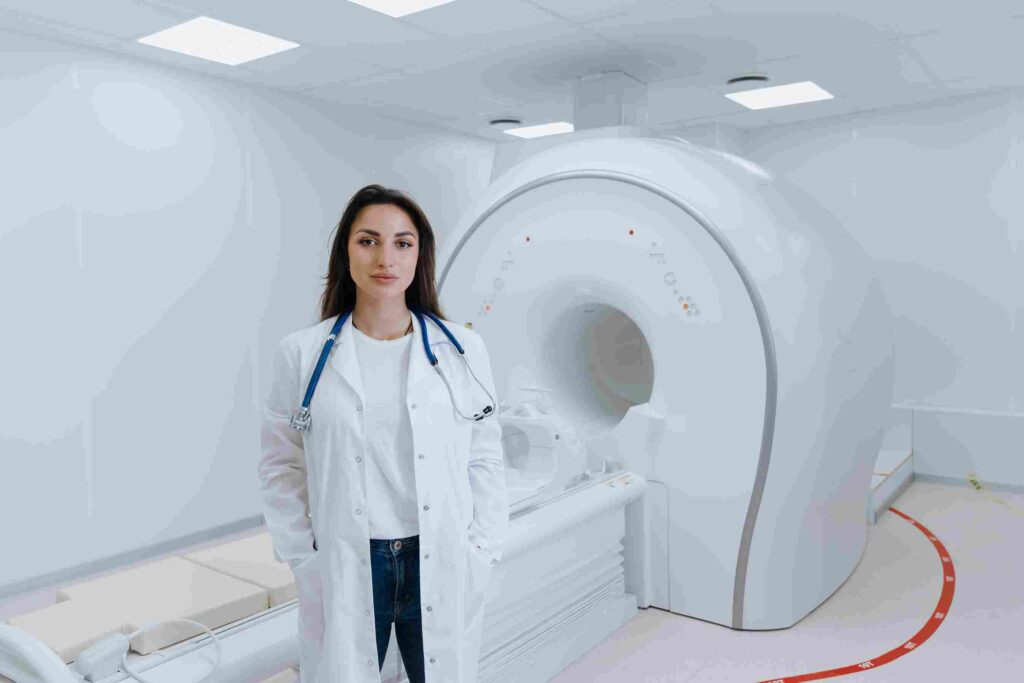
MRI Coronary Angiography
Book your MRI Coronary Angiography Scan with CareBox today – accurate results, expert radiologists, and transparent prices starting at ₹7,999.
Call Now At +91 9953630773 to Book your test at 50% Discount.
Exclusive Benefits with Carebox

Personalized support to help you find the best centers nearby

Guaranteed discount on your scan at any center you choose

Get up to 60% additional discount on All tests & Scans

Skip the wait—book priority appointments for your scans.

Why CareBox is the Right Choice for You

Over 1.5 Lakh Patients Trust Us for Their Tests Every Month
Get Up to 60% Off on Every Scan—Start Saving Today!
100% Reliable and Accurate Reports
ISO and NABH Certified Scan Center
What is MRI Coronary Angiography?
MRI Coronary Angiography (MRA-Coronary) is a non-invasive imaging test that uses magnetic resonance imaging (MRI) technology to visualize the coronary arteries (the vessels supplying blood to the heart muscle) and assess for abnormalities such as narrowing (stenosis), plaque, or anomalies.
- Unlike traditional invasive coronary angiography (catheter-based) or CT coronary angiography, MRI coronary angiography avoids ionising radiation and often can be done without iodinated contrast agents.
- It is also referred to as coronary magnetic resonance angiography (CMRA) or coronary MRA.
- Because of the small, tortuous nature of the coronary arteries and cardiac/respiratory motion, it has historically been more technically challenging than e.g. aortic or renal MRA.
Why is it done?
It is done when doctors suspect coronary artery disease (CAD) or want to evaluate coronary anatomy in patients who might prefer a non-radiation alternative.
How long?
Typically the scan may take around 30-60 minutes depending on protocol and motion correction.
Key benefit: Radiation-free, contrast-optional (in some protocols) imaging of coronaries.
Limitation: Lower spatial resolution compared with invasive angiography or CT angiography; may be more susceptible to motion artefacts.
What is MRI Coronary Angiography?
Coronary arteries run on the surface of the heart and are relatively small and moving (because of cardiac and respiratory motion). Standard MRI techniques were challenged to capture them clearly, but advances (whole-heart imaging, motion compensation, accelerated sequences) have improved feasibility. The term “MRI Coronary Angiography” refers to an MRI-based method to visualise these vessels, sometimes non-contrast, sometimes using contrast, and often using special gating for the heartbeat and respiration.
How it works
- The patient lies in the MRI scanner, typically on a table that slides into a magnet bore.
- ECG gating and/or respiratory gating are used so imaging is synchronised with specific portions of the cardiac/respiratory cycle, reducing motion blurring.
- A volume covering the heart is shot with 3 D sequences, after which the data is reconstructed to show the coronary arteries.
- Sometimes a contrast agent (MRI-gadolinium based) is used; other times non-contrast techniques are employed.
- Filters and special reconstructions are applied to boost signal and reduce noise artefacts.
- MRI uses powerful magnets, radiofrequencies and computer processing to create detailed images of the body’s internal tissues.
- In angiography (blood-vessel imaging), the blood vessel lumen is highlighted, sometimes using contrast agent gadolinium or specialised MRI sequences.
Coronary-specific challenges & solutions
The coronary arteries pose some unique difficulties:
- They are small in diameter and have curved/tortuous paths.
- They move with every heartbeat and also with breathing, so cardiac and respiratory motion degrade image quality.
- To address this: motion correction, high spatial resolution sequences, 3D whole-heart imaging, advanced reconstruction methods (including AI-based) are used.
Contrast vs non-contrast
- Some protocols use contrast agents (gadolinium or blood-pool agents) for better vessel delineation.
- Other protocols are non-contrast, beneficial especially in patients with renal impairment.
AI and advanced imaging
- AI and deep-learning approaches are increasingly being applied to cardiovascular MRI including coronary MRA: to accelerate acquisition, improve image reconstruction, automate segmentation and reduce motion artefacts.
- One 2024 study showed an AI model for CMR-analysis achieved performance on par or better than experienced physicians.
When and why it’s used
- When a patient has suspected coronary artery disease but one wants to avoid ionising radiation or iodinated contrast (used in CT/angiography).
- For anatomical assessment of coronary anomalies anomalous origin of a coronary artery when a detailed vessel map is required.
- In research settings or advanced imaging centres to monitor coronary atherosclerosis longitudinally.
Advantages & Limitations
Advantages
- No ionising radiation.
- Non-invasive relative to catheter angiography.
- Good soft tissue contrast; can integrate with functional MRI of the heart perfusion, tissue characterisation.
Limitations
- Spatial resolution is lower compared to invasive angiography or high-end CT angiography.
- Acquisition time may be longer and image quality more affected by patient motion, arrhythmia or breathing.
- Not universally available; many centres still use CT angiography or invasive angiography as first-line.
- Some patients contraindicate certain implanted devices, claustrophobia.
AI Overview in MRI Coronary Angiography
Why AI matters
AI (Artificial Intelligence) , especially machine learning (ML) and deep learning (DL) , is transforming cardiovascular imaging by automating tasks, improving image quality, accelerating workflows, and aiding diagnostic accuracy.
In the context of coronary MRI (and also coronary CT/MR imaging generally) AI helps in:
- Motion correction and image reconstruction, improving clarity of coronary vessels.
- Automated segmentation of coronary arteries, plaque and stenoses.
- Risk stratification: linking imaging biomarkers with outcomes.
AI mode: What does it mean in this context?
Here “AI mode” can refer to imaging workflows where AI tools are integrated into the acquisition or post-processing pipeline
- AI‐reconstruction mode: Deep learning reconstruction (DLR) applied during and after scan, enabling higher resolution or faster scan times.
- AI‐analysis mode: Automated detection/quantification of vessel stenosis, plaque burden, luminal narrowing etc.
- AI‐decision support mode: Based on imaging AI analytics, supporting the clinician in deciding further management or intervention.
Current evidence & applications
- Deep learning reconstruction has been shown to improve image quality for high-resolution non-contrast MR coronary angiography.
- AI tools are widely being explored in coronary CT and MR imaging for plaque quantification, prognostic modelling and workflow optimisation.
- In coronary CT angiography (CCTA) there is a consensus statement emphasising the role of AI/ML tools in coronary imaging biomarkers.
- So, as MRI coronary angiography improves, AI mode will become more standard – enabling faster, better scans and more accurate interpretation.
How this benefits patients and clinicians
- Shorter scan times less discomfort, less motion artefact.
- Higher resolution images better confidence in excluding significant disease.
- Automated tools reduce workload on radiologists/cardiologists and may reduce variability.
- Combined imaging AI analytics may help stratify risk and guide personalised treatment.
Limitations and cautions of AI in this domain
- AI models rely on high-quality, well-labelled data. Many cardiac MRI datasets are still smaller than ideal.
- Regulatory approval, validation across varied populations and centres, and generalisability remain concerns.
- Ethical aspects: transparency of AI decision-making, clinician oversight, liability.
- AI is a tool that does not replace clinician judgement.
MRI Coronary Angiography Clinical Process & Transactional Considerations
When a patient might undergo this test
- Suspected coronary artery disease (intermediate risk) where a non‐radiation test is desirable.
- Patients with renal dysfunction or iodine‐contrast allergy (so CT angiography may be risky) but who can undergo MRI.
- Congenital coronary anomalies.
- Longitudinal monitoring of coronary arteries in research/advanced centres.
- Pre-operative assessment in selected cases.
Preparation & what to expect
- Screening for contraindications: implanted devices (pacemakers, defibrillators), metallic foreign bodies, claustrophobia, kidney function if contrast is used.
- The patient changes into a gown and removes metal objects.
- IV access may be placed if a contrast agent is to be used.
- The scan table slides into the magnet. Noise, narrow space earplugs headphones provided.
- Breath‐holds/formats may be required; motion compensation is used.
- Scan may take ~30-60 minutes (varies).
- After the scan, unless sedation was used, you can often resume normal activities.
How results are used & what happens next
- The images are reviewed by a radiologist/cardiologist with expertise in cardiac imaging.
- If no significant narrowing is found, you may be reassured and follow‐up may continue.
- If significant disease is detected, further management (medical therapy, CT angiography, invasive angiography) may be recommended.
- With AI analysis mode available, reports may include quantification of stenosis or plaque characteristics helping guide next steps.
availability & transactional search terms
- Availability: Many large hospitals and cardiac imaging centres offer MRI coronary angiography; not all smaller clinics will.
- When considering booking this test (transactional intent), important to ask: machine strength (3 T often provides better quality), does the centre use advanced motion-compensation and AI reconstruction analysis, is a cardiac radiologist interpreting the scan, what are the preparatory instructions.
AI Mode in Practice: What to Ask Look For
If you are considering a centre that offers “AI mode” or “AI-enabled MRI coronary angiography here are practical questions and features to check:
- Does the imaging centre use deep-learning reconstruction (DLR) or advanced motion compensation network to improve coronary image clarity studies show DLR improved vessel sharpness in non-contrast coronary MR angiography.
- Is there automated/AI-based post-processing for coronary artery segmentation, stenosis quantification or plaque burden assessment
- Are the AI tools validated (published research) and used in routine clinical workflow
- Is the reporting radiologist/cardiologist aided by AI, or is the AI result simply a “nice to have”
- is the turn-around time of results using AI mode (may be faster)
- How does the cost compare between standard MRI and AI-enabled MRI in their centre
- What is the machine strength (3 T vs 1.5 T) and is the AI mode optimised for that strength
MRI Coronary Angiography vs Alternatives
MRI vs CT Coronary Angiography
- CT angiography provides very high spatial resolution and is more widely used for coronary anatomical imaging.
- MRI coronary angiography offers radiation-free imaging, which is a major advantage especially for younger patients or repeated imaging.
- MRI may have more motion/artifact issues; CT is faster and more established for coronaries.
- If a centre offers AI-enabled MRI, the gap may shrink in image quality and speed.
MRI vs Invasive Coronary Angiography
- Invasive coronary angiography (via catheter) remains the gold standard, especially when intervention (stenting/bypass) is needed.
- MRI coronary angiography is diagnostic/scoping, not therapeutic. If an intervention is anticipated, invasive angiography may still be needed.
- MRI is non-invasive and carries fewer procedural risks (no catheter insertion).
Cost of MRI Coronary Angiography in India
The cost of MRI Coronary Angiography in India varies based on factors such as location, healthcare facility, and the inclusion of AI technology. On average, the procedure costs between ₹9,200 and ₹30,000.
the test at 9,200 to ₹30,000, depending on the specific requirements and technology used. It’s advisable to consult with them for the most accurate pricing.
Patients & Referrers
- If you are evaluating coronary artery disease and want to minimize radiation exposure, MRI coronary angiography is an important option.
- Ask your imaging centre about machine strength (3 T preferred), acquisition protocol, whether they use AI reconstruction/analysis (AI mode), the experience of the interpreting cardiologist, and cost.
- AI-enabled MRI coronary angiography is increasingly available and may offer improved image quality and faster results, but the centre explains what “AI mode” means and what additional cost (if any) is involved.
- Understand that while MRI coronary angiography is powerful, it is not a direct substitute for invasive angiography when intervention is required.
- Consider your personal situation (kidney function, implanted devices, claustrophobia, need for repeat imaging) when choosing imaging modality.
Conclusion
The diagnostic test MRI Coronary Angiography is a cutting-edge non-invasive imaging tool that offers radiation-free visualisation of the coronary arteries. With the advent of AI mode – including deep-learning reconstruction and automated vessel/stenosis analysis – its utility is expanding, offering both informational (education, understanding options) and transactional (booking the test, selecting a centre) value. If you are in or around Delhi (or anywhere) and considering this test, choosing a centre with 3 T MRI, strong cardiac imaging experience, AI-enabled protocols and clear pricing will maximise value and quality.
Frequently Asked Questions
Q: Is MRI Coronary Angiography safe?
Yes, it uses magnetic fields and radio waves (no ionising radiation). However, you must inform your doctor if you have metal implants or pacemakers, or if you are claustrophobic. Some MRI contrast agents carry small risks especially in severe kidney disease.
Q: Can I have MRI coronary angiography if I have a pacemaker or ICD?
It depends on the type of device and whether it is MRI-compatible. Many older devices are still contraindicated. The imaging centre will need to check device compatibility.
Q: How long does the scan take?
Typically around 30-60 minutes (varies by protocol, machine, whether contrast and AI reconstruction are used).
Q: Do I need to fast or prepare special for this scan?
Preparation is modest. You may be asked to avoid metal objects, remove jewelry, and if contrast is planned your kidney function may need checking. Ask the centre for their specific instructions.
Q: What happens after the scan?
A specialist reviews the images and issues a report. If findings are normal, your doctor may use this to continue routine care. If there are significant blockages or anatomy that suggests risk, further testing (CT, invasive angiography) may be recommended.
Q: What costs should I expect in India (Delhi) for MRI coronary angiography?
Costs vary widely depending on the machine (3 T vs 1.5 T), use of contrast, sedation (if needed), AI-enhancement, and report turnaround. You should contact local cardiac imaging centres for a quote.
Q: What is “AI mode” in MRI coronary angiography and does it matter for me?
AI mode refers to MRI scans that use artificial intelligence for image reconstruction, motion correction or automated analysis. This typically improves image clarity, may reduce scan time and may allow better detection of subtle coronary changes. For patients, this can mean higher confidence in the result and perhaps better cost-value if the centre charges extra for AI. It is worth asking if the centre offers AI-enabled coronary MRI and what exactly it involves.
Q: Can MRI coronary angiography detect plaque only narrowing?
MRI coronary angiography primarily visualises the lumen (the inside of the vessel) and can indicate narrowing. Research is underway to characterise plaque composition and burden using MRI, but currently CT and invasive methods remain superior for detailed plaque characterisation.
How to Book MRI Coronary Angiography From CareBox
Call us or chat with our customer service agent.
We will answer all your question and help to book your appointment.
Lab details & charges will be shared with you over the call.
We’ll book your test as per your preferred date and time slot.