
MRI Head – Cost, Side Effects & Centres in Delhi
Starting only @
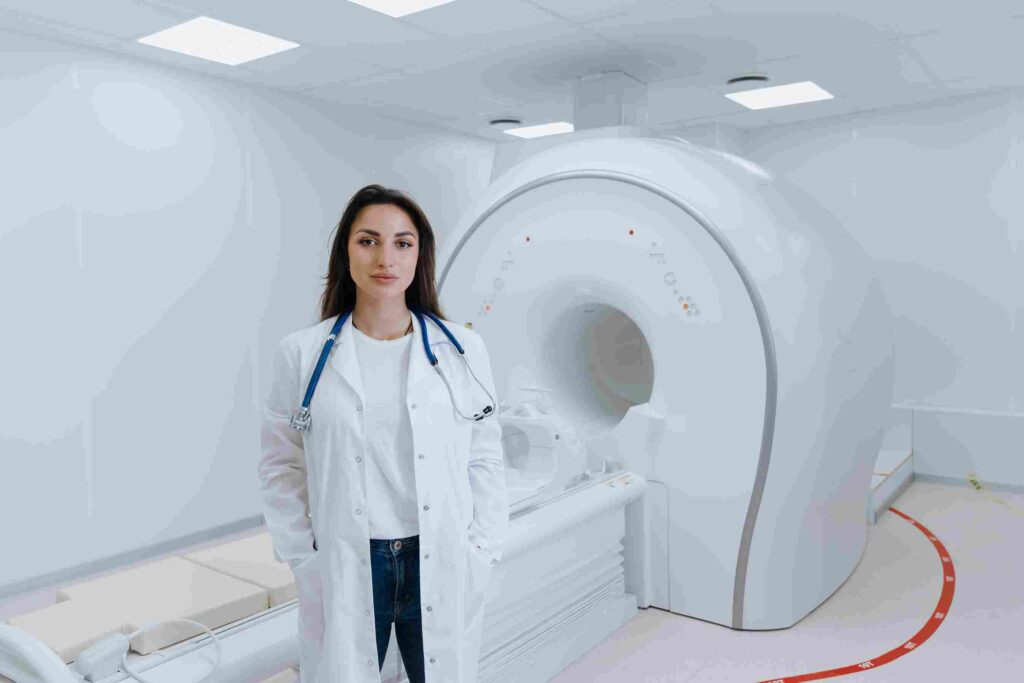
MRI Head Scan
Book Your MRI Head Online at the Best Cost in Delhi/NCR with CareBox. Get accurate and reliable imaging at top NABL & NABH accredited diagnostic centres. Schedule your MRI Head easily through CareBox and Get upto 50% discount.
Call 9953630773 to book your appointment today.
Exclusive Benefits with Carebox

Personalized support to help you find the best centers nearby

Guaranteed discount on your scan at any center you choose

Get up to 60% additional discount on All tests & Scans

Skip the wait—book priority appointments for your scans.

Why CareBox is the Right Choice for You

Over 1.5 Lakh Patients Trust Us for Their Tests Every Month
Get Up to 60% Off on Every Scan—Start Saving Today!
100% Reliable and Accurate Reports
ISO and NABH Certified Scan Center
An MRI Head, also called a Head MRI or Brain MRI, is one of the most important diagnostic imaging tests used to examine the brain, skull, and surrounding soft tissues. Unlike CT scans that use radiation, MRI uses magnetic fields and radio waves to create clear, detailed, and multidimensional images of the brain. Because of its high accuracy and safety, MRI Head is widely used to diagnose headaches, strokes, neurological disorders, trauma, infections, tumors, and more.
This complete guide explains the purpose, procedure, benefits, risks, cost, preparation, and how CareBox helps patients book an affordable MRI Head scan in Delhi or near them.
What is an MRI Head?
An MRI Head is a non-invasive imaging test that captures high-resolution images of the brain, skull, sinuses, and associated soft tissues. It is one of the most powerful diagnostic tools in modern neurology.
MRI Head can detect:
-
Brain injuries
-
Tumors
-
Stroke
-
Aneurysms
-
Infection or inflammation
-
Seizure disorders
-
Developmental abnormalities
-
Multiple sclerosis
-
Hearing and vision-related issues
-
Sinus conditions
-
Brain bleeding or swelling
Because MRI does not expose you to radiation, it is safe for detailed evaluation and repeated testing when necessary.
Why an MRI Head is Needed
Doctors may recommend an MRI Head when symptoms indicate a problem inside the brain or related structures.
Common symptoms requiring MRI Head:
-
Severe or persistent headache
-
Vision changes
-
Hearing loss
-
Seizures
-
Memory loss
-
Changes in behaviour
-
Difficulty speaking
-
Numbness or weakness
-
Loss of balance
-
Migraine that is not improving
-
Persistent nausea or dizziness
When other imaging tests like X-rays or CT scans do not show clear results, MRI Head provides more detailed information.
What MRI Head Can Detect
MRI Head is used for a wide range of conditions, including:
1. Headaches & Migraines
Helps identify causes such as swelling, vascular issues, or nerve disorders.
2. Stroke
Shows ischemic stroke, hemorrhage, and early brain tissue changes that are invisible in CT scans.
3. Brain Tumors
Detects types, shape, size, and exact location of brain tumors.
4. Infections
Finds abscesses, meningitis, encephalitis, and sinus infections spreading to the brain.
5. Neurological Disorders
Used for diagnosing epilepsy, vertigo, Alzheimer’s, Parkinson’s, and multiple sclerosis.
6. Trauma
Evaluates internal bleeding, swelling, and skull injuries.
7. Congenital Abnormalities
Useful for pediatric developmental issues such as hydrocephalus.
8. Inner Ear & Vision Problems
Detects issues in optic nerves, auditory nerves, and brainstem structures.
9. Pituitary Gland Disorders
Used to detect pituitary tumors or hormonal abnormalities.
MRI Head is one of the most reliable tests when a doctor needs clarity about brain health.
How MRI Head Works
MRI Head combines magnetic fields and radio waves to scan your head and generate cross-sectional images.
Key components of MRI technology:
-
A large magnet creates a strong magnetic field
-
Radio waves capture signals from body tissues
-
A computer converts the signals into 2D and 3D images
Some MRI Head scans require contrast dye (gadolinium) to highlight blood vessels, tumors, or infections more clearly.
Types of MRI Head
MRI Head can be performed in different ways depending on the clinical need:
1. Non-Contrast MRI Head
Used for initial evaluation of headaches, trauma, seizures, or neurological symptoms.
2. Contrast MRI Head
Helpful for detecting tumors, infections, inflammation, and vascular disorders.
3. MRI Angiography (MRA) Head
Focuses on blood vessels to detect aneurysms, clots, and vascular malformations.
4. MRI Venography (MRV) Head
Checks venous sinuses and detects blood flow issues in veins.
5. Functional MRI (fMRI)
Used to study brain activity and cognitive functions.
The doctor decides the best type based on symptoms and medical condition.
Step-by-Step Procedure
Understanding the procedure helps reduce anxiety and ensures a smooth experience.
1. Arrival and Preparation
-
You will be asked to remove metal objects such as jewelry, belts, or watches.
-
A hospital gown may be provided.
-
You must inform the technician if you have implants, pacemakers, or metallic devices.
2. Positioning
You lie down on the MRI table, and your head is placed inside a padded head coil for stabilization.
3. Contrast Injection (if required)
A small cannula is inserted into your arm for contrast dye to improve visibility.
4. Scanning
-
The table slides into the MRI machine.
-
The machine may make loud tapping sounds.
-
You must stay still to avoid blurry images.
-
The technician monitors you throughout the scan.
5. Duration
The scan usually takes 20–30 minutes for non-contrast and 30–45 minutes for contrast MRI.
6. After the Scan
You can go home immediately and resume normal activities unless otherwise advised.
When MRI Head is Not Recommended
MRI Head is safe, but certain medical conditions require caution.
Avoid or consult your doctor if you have:
-
Pacemaker
-
Cochlear implant
-
Aneurysm clips
-
Artificial heart valves
-
Metal fragments in the body
-
Severe kidney issues (for contrast)
-
Severe claustrophobia
Always inform the radiologist beforehand.
Benefits of MRI Head
MRI Head offers many diagnostic advantages:
1. No Radiation
A safer alternative to CT scans for detailed brain imaging.
2. High-Resolution Images
Detects even small lesions and structural abnormalities.
3. Superior Soft Tissue Contrast
Helps evaluate brain tissues, vessels, and nerves.
4. Early Detection
Shows early signs of stroke, tumors, and infections.
5. Multi-Planar Imaging
Provides 3D views of the brain and skull.
6. Safe for Children
No radiation exposure makes it ideal for pediatric cases.
Limitations of MRI Head
Despite its advantages, MRI also has limitations:
-
Longer scan time compared to CT
-
Not ideal for patients with metallic implants
-
More expensive
-
Requires staying still
-
Contrast may cause mild reactions in some people
Your doctor will weigh the benefits and limitations before recommending the scan.
MRI Head Cost in India (2025)
The MRI Head cost depends on several factors, including machine type, contrast use, and city.
Average Cost Range in India
Rs. 3,500 to Rs. 7,000
MRI Head Cost in Delhi
Rs. 4,000 to Rs. 7,000
Factors affecting the cost:
-
1.5 Tesla vs. 3 Tesla MRI machine
-
Use of contrast dye
-
Diagnostic centre quality
-
Radiologist experience
-
Emergency or priority scan requirement
With CareBox, you can compare prices and choose the most affordable and trusted diagnostic centre in your area.
MRI Head Scan in Delhi
Delhi has several advanced diagnostic and imaging centres offering MRI Head services. However, choosing the right one is important for accurate results.
CareBox helps you access:
-
Leading NABL & NABH-accredited labs
-
3 Tesla MRI machines
-
Experienced radiologists
-
Transparent pricing
-
Same-day appointment slots
-
Fast digital reports
If you are looking for a reliable MRI Head scan in Delhi, CareBox ensures a safe, accurate, and affordable testing experience.
MRI Head Near Me
Searching for “MRI Head near me” can be time-consuming. CareBox simplifies the process by helping you:
-
Find nearby diagnostic centres
-
Compare prices
-
Check technology (1.5T or 3T MRI)
-
View patient reviews
-
Book instantly
All results are verified for quality, ensuring your safety and comfort.
Preparation Tips for MRI Head
Follow these tips for a smooth MRI experience:
-
Wear comfortable clothing
-
Remove jewelry and metallic items
-
Inform the technician about implants or surgeries
-
Avoid heavy meals before a contrast MRI
-
Tell the staff if you are claustrophobic
-
Bring previous MRI or CT reports
Proper preparation helps produce clear and accurate images.
Risks and Safety
MRI is considered very safe, but the following risks may occur:
Mild Risks:
-
Slight discomfort lying still
-
Warm sensation during contrast injection
-
Mild claustrophobia
Rare Risks:
-
Allergic reaction to contrast dye
-
Kidney issues in patients with renal disease
Inform the diagnostic centre if you have any allergies or medical conditions.
After the Test
Most patients resume normal activities immediately. If contrast was used, drinking water helps flush it out faster. The radiologist will interpret the scan and send the report within 24–48 hours.
How CareBox Helps You
CareBox is dedicated to making diagnostic testing easier, more transparent, and affordable.
Why choose CareBox for MRI Head?
-
Affordable options from multiple labs
-
NABL/NABH certified partners
-
High-end 3T MRI machines
-
One-click appointment booking
-
Lowest price guaranteed
-
24×7 support
-
Verified and accurate reports
CareBox ensures a safe and stress-free diagnostic journey for you and your family.
Summary
MRI Head is one of the most reliable and advanced imaging tests used to diagnose brain-related symptoms such as headaches, seizures, stroke, trauma, infections, and more. It is completely radiation-free and offers detailed images of the brain and cranial structures.
If you are looking for the MRI Head cost, MRI Head scan in Delhi, or MRI Head near me, CareBox helps you find trusted diagnostic centres with accurate reports and affordable pricing.